


Why Bone Health Is About More Than Calcium
Bones are not lifeless structures. They are constantly changing throughout life. Your body regularly breaks down old bone tissue and replaces it with new tissue. This natural process depends on nutrition, movement, hormones, and overall wellness.
That is why healthy aging often involves more than simply increasing calcium intake.
Your bones also rely on:
- Protein and collagen structure
- Nutrient metabolism
- Muscle support
- Physical activity
- Healthy lifestyle habits
When one part of the system lacks support, the body may not function as efficiently as it should over time.
This is where supportive nutrients like Vitamin B6 become part of the conversation.
What Does Vitamin B6 Actually Do?

Vitamin B6 is a water-soluble vitamin involved in many normal body functions. It support:
- Protein metabolism
- Enzyme activity
- Nervous system function
- Energy production
It also helps the body process amino acids, which are the building blocks of proteins.
Why does that matter for bones?
Because bones rely on structural proteins like collagen to help maintain their framework and flexibility. Nutrients involved in protein-related processes may help support overall bone wellness as part of a healthy lifestyle.
Vitamin B6 does not work alone, but it plays a supportive role in helping the body function properly.
Why Researchers Are Looking at Vitamin B6 and Bone Aging
As people age, maintaining movement, flexibility, and physical strength becomes increasingly important. Scientists are now exploring how different nutrients may support healthy aging beyond basic bone density.
Vitamin B6 has gained attention because of its role in normal protein metabolism and overall cellular function.
Some research suggests that balanced nutrient intake support the body’s natural structural systems during aging. Since collagen and connective tissues are important parts of bone structure, nutrients involved in these pathways continue to interest researchers.
It highlights the idea that healthy bones depend on multiple systems working together.
A balanced nutritional routine support long-term wellness, movement, and everyday comfort as the body ages.
Modern Eating Habits May Leave Nutritional Gaps
Today’s eating habits are not always nutrient-friendly.
Busy schedules, processed foods, skipped meals, and restrictive diets can make it harder for some people to get enough essential vitamins from food alone.
Many adults focus heavily on a few “popular” nutrients while overlooking the importance of overall nutritional balance.
Over time, inconsistent eating habits may affect how well the body receives supportive nutrients needed for healthy aging.
That is one reason many wellness-focused adults are paying more attention to:
- B vitamins
- Bone support nutrients
- Protein intake
- Whole-body wellness routines
A balanced approach often works better than focusing on one nutrient alone.
Foods That Naturally Contain Vitamin B6

Vitamin B6 is found in several everyday foods. Some common sources include:
- Chickpeas
- Salmon
- Tuna
- Chicken
- Turkey
- Potatoes
- Bananas
- Fortified cereals
Eating a variety of nutrient-rich foods can help support overall wellness and healthy aging.
However, not everyone maintains a perfectly balanced diet every day. Lifestyle, food choices, and aging-related nutritional changes may all affect nutrient intake.
Can Supplements Help Support Bone Wellness?

For some people, supplements help fill nutritional gaps when diet alone is not enough.
Many bone wellness formulas now include combinations of:
- Calcium
- Vitamin D
- Magnesium
- Vitamin K
- B vitamins, including Vitamin B6
This broader approach reflects a growing understanding that bone health involves many nutrients working together.
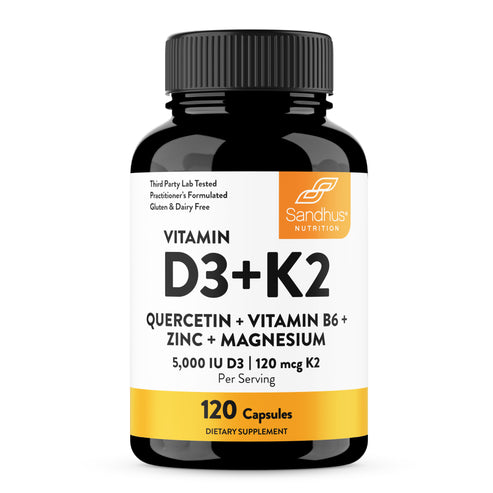
When choosing a supplement, quality matters. Look for products that combines Vitamin D3, K2 and B6 together with cofactor nutrients like magnesium, zinc, and quercetin.
Consistency also matters. Healthy aging habits usually work best when supported daily over time.
Final Takeaway
Bone health is about more than calcium alone. Your body depends on many nutrients working together to support healthy aging, movement, and structural wellness.
Vitamin B6 may not always receive the same attention as other bone-support nutrients, but its role in protein metabolism and overall body function makes it an important part of the bigger wellness picture.
A balanced diet, active lifestyle, and supportive nutritional routine may help support healthy bones and mobility as you age.
If you are looking to support long-term wellness, it may be worth paying attention to the nutrients that often go unnoticed.
FAQs
1. Can Vitamin B6 support bone health?
Vitamin B6 supports several normal body functions connected to protein metabolism and overall wellness, which may indirectly support healthy bone aging.
2. Is Vitamin B6 only important for energy?
No. Vitamin B6 also supports enzyme activity, nervous system function, and protein metabolism throughout the body.
3. Can Vitamin B6 be taken with calcium and Vitamin D?
Many wellness supplements combine these nutrients as part of a balanced bone support formula.
References
- Dai Z, Koh WP. B-vitamins and bone health--a review of the current evidence. Nutrients. 2015 May 7;7(5):3322-46. doi: 10.3390/nu7053322. PMID: 25961321; PMCID: PMC4446754. Learn More
- Welan R. Effect of Vitamin B6 on Osteoporosis Fracture. J Bone Metab. 2023 May;30(2):141-147. doi: 10.11005/jbm.2023.30.2.141. Epub 2023 May 31. PMID: 37449347; PMCID: PMC10346000. Learn More
- Laird E, Ward M, McSorley E, Strain JJ, Wallace J. Vitamin D and bone health: potential mechanisms. Nutrients. 2010 Jul;2(7):693-724. doi: 10.3390/nu2070693. Epub 2010 Jul 5. PMID: 22254049; PMCID: PMC3257679. Learn More
