


Why a "Bad Knee" Isn't Always Just About the Knee

Your knee is one of the hardest-working joints in your body. Every step, squat, and climb depends on it. But your knee doesn't work alone.
Strong muscles help support the joint. Healthy bones provide stability. Ligaments and tendons keep everything moving in the right direction. When one part of this system isn't working well, your knee may feel the difference.
That is why knee discomfort doesn't always have one simple cause. Past discomforts, body weight, activity level, aging, and nutrient status can all play a role. Looking at the bigger picture helps you better understand what your body may need.
What Does Vitamin D Have to Do With Joint Wellness?
Most people think of Vitamin D as the bone vitamin but its job goes beyond that.
Vitamin D helps your body absorb calcium, which is important for maintaining healthy bones. It also supports normal muscle function. Healthy muscles help stabilize joints during everyday movement, making simple activities feel smoother and more comfortable.
Without enough Vitamin D, your body may not use calcium as efficiently. Over time, this can affect the systems that support comfortable movement.
Maintaining healthy Vitamin D levels is an important part of supporting overall bone and muscle health.
Could Low Vitamin D Be More Common Than You Think?

Yes. Many Americans do not get enough Vitamin D.
Modern life has changed how much time we spend outdoors. Many people work in offices, commute by car, and relax indoors after work. Even sunny climates don't always guarantee enough Vitamin D because sunscreen, protective clothing, and limited outdoor time can reduce your skin's ability to make it.
Older adults also produce less Vitamin D through the skin than younger adults. During the fall and winter months, getting enough sunlight can become even more difficult in many parts of the United States.
This is one reason healthcare providers often recommend checking Vitamin D levels when appropriate.
Signs That May Be Worth Discussing With Your Healthcare Provider
Low Vitamin D doesn't always cause obvious symptoms. However, some people notice changes that make them want to ask more questions.
These may include:
- Feeling stiff after sitting for long periods
- Muscle weakness during everyday activities
- Limited time outdoors
- Low energy along with poor sunlight exposure
- Living in northern climates with long winters
These signs do not mean you have low Vitamin D, and they do not explain every case of knee discomfort. A simple test suggested by your healthcare provider is the best way to know your Vitamin D status.
Everyday Habits That Support Healthy Knees
Healthy knees are supported by healthy daily habits.
Regular movement helps keep muscles active. Strength exercises for your legs can provide better support around the knee. Eating enough protein helps maintain muscle tissue, while calcium and Vitamin D work together to support healthy bones.
Maintaining a healthy body weight may also help ease everyday stress on the knees. Staying active, drinking enough water, and choosing a balanced diet all contribute to better movement over time.
These small habits work together and often have a bigger impact than focusing on just one solution.
Is a Vitamin D Supplement Worth Considering?

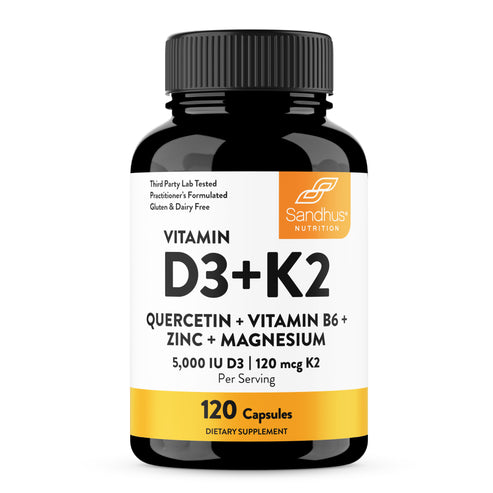
If you don't get enough Vitamin D through sunlight or food, a supplement support healthy Vitamin D levels. When choosing a supplement, look for products that are made in GMP-certified facilities, undergo third-party quality testing, and clearly list the amount of Vitamin D in each serving.
Final Takeaway
A "bad knee" rarely has just one explanation. While low Vitamin D is not the cause of every knee concern, it is an important nutrient that supports healthy bones, normal muscle function, and everyday movement.
If knee stiffness or discomfort has become part of your daily routine, it may be worth looking beyond the joint itself. Talking with your healthcare provider about your Vitamin D status can help you better understand whether it is one piece of your overall wellness picture.
Supporting your body with healthy habits, regular activity, and adequate Vitamin D help keep you moving with greater confidence every day.
FAQs
1. Can Vitamin D support joint health?
Vitamin D supports healthy bones and normal muscle function, which help overall joint wellness and movement.
2. How can I get more Vitamin D?
You can get Vitamin D from sunlight, certain foods like fatty fish and fortified dairy products, and dietary supplements when needed.
3. Is Vitamin D3 better than Vitamin D2?
Both forms can help healthy Vitamin D levels. Vitamin D3 is commonly used in dietary supplements and is often chosen for daily supplementation.
References
- Gao XR, Chen YS, Deng W. The Effect of Vitamin D Supplementation on Knee Osteoarthritis: A Meta-analysis of Randomized Controlled Trials. International Journal of Surgery. 2017 Oct 1;46:14-20. Learn More
- Wang H, Liu Z, Wang X, Dang X, Shi Z, Wang H. Optimal Serum Vitamin D3 Levels Are Associated With Lower Osteoarthritis Risk and Better Overall Health in US Adults. Scientific Reports. 2025 Nov 10;15(1):39327. doi:10.1038/s41598-025-23013-y. PMID: 41214123; PMCID: PMC12603322. Learn More
- Laird E, Ward M, McSorley E, Strain JJ, Wallace J. Vitamin D and Bone Health: Potential Mechanisms. Nutrients. 2010 Jul;2(7):693-724. doi:10.3390/nu2070693. PMID: 22254049; PMCID: PMC3257679. Learn More
